

1. Properties of titanium foil
High strength and low density: Compared to other metals, titanium has a better strength/ density ratio. It is lightweight for its increased strength and good rigidity.
Corrosion resistance: Titanium alloys have maintained remarkable corrosion resistance in exposed, humid, and seawater environments.
High and low temperature resistance: Titanium can endure higher working temperatures for long periods, around 450 – 500°C. He also retains mechanical properties through low and ultra-low temperatures.
Biocompatibility: Titanium is practically non-toxic, non-magnetic, and human tissue compatible. Because of these properties, it is extensively utilized in medical implants.
Thermal conductivity and electrical conductivity: Like other metals, titanium has a moderate thermal conductivity, which can be improved through alloying or surface treatment.
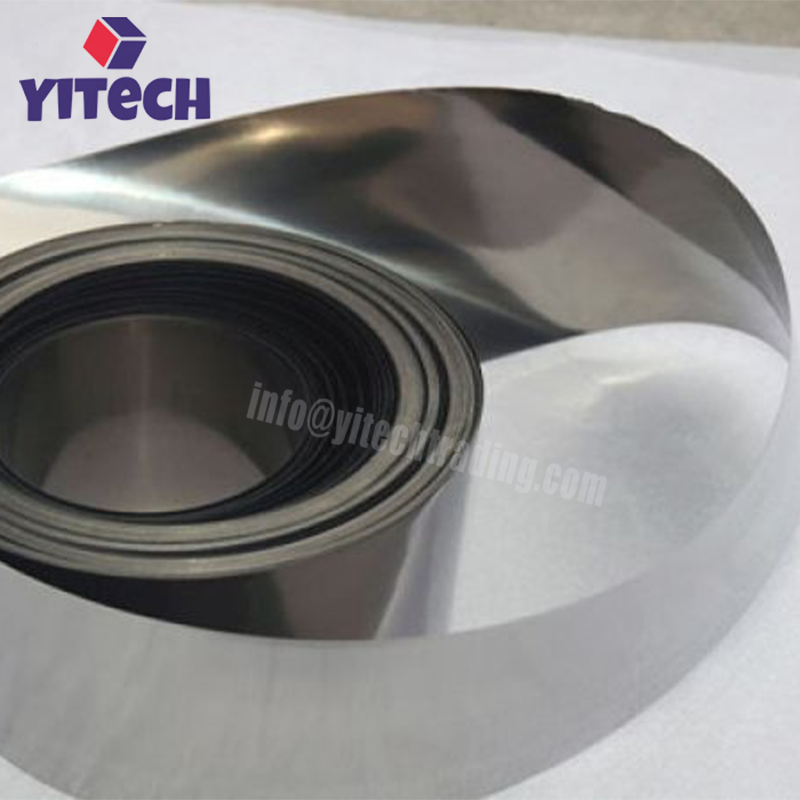
2. Applications of Titanium Foil
Aerospace: Employed in aircraft engines, frames, skins, fasteners, and other parts to improve fuel efficiency and ensure safety.
Medical health: In surgical instruments, dental restorations, and orthopedic implants.
Chemical energy: For electrodes in electrolyzers, bipolar plates of hydrogen fuel cells, and in seawater desalination systems.
Electronic technology: In high-reliability connectors, semiconductor heat sinks, and in flexible circuit substrates.
Other fields include automotive, navigation, precision instrument making, nuclear power, medical machinery, and in corsetry.
3. Production process of titanium foil
Raw material preparation: Sponge titanium is usually used as raw material, and titanium foil is made through smelting, rolling and other processes.
Rolling process: including hot rolling and cold rolling. Cold rolling is the key step in the production of titanium foil, and rolling parameters need to be precisely controlled.
Heat treatment: improve the microstructure and properties of titanium foil through vacuum annealing or protective atmosphere annealing.
Surface treatment: including chemical treatment, electrochemical treatment, etc., to improve the surface quality and corrosion resistance of titanium foil.
4. Status and trends of the titanium foil market
Market size: The titanium foil industry is expanding at a consistent pace, primarily due to the aircraft, medical, and chemicals sectors, which have fostered steady growth in the global titanium foil market.
Main producers: The leaders in titanium foil production are still the USA, Russia, Japan, and China, where China has made great strides in titanium foil production technology in the last several years.
Import and export situation: Advanced countries are leaders in producing high-performance titanium foil, while developing countries have increased their share of the market through technology transfer and self-innovation in research and development.
Future trends: The industry's growth will also continue to improve with an increase in low-cost aviation and alternate energy sources as newer global regions and high-end domains, such as aerospace, place a greater focus on the use of high-performance titanium foils. Alongside this, eco-friendliness and sustainable development will be key focus areas for the titanium foil industry in the upcoming years.
5. Advancements and problems concerning titanium foil
Engineering problems: Foil of titanium has seen widespread application stalled by its difficulties in production, which is further complicated by its high cost. Controlling quality grade and the number of defects is a difficult task while making titanium foil, as the loss in thickness means the process is that much more difficult.
Development strategy: Strive to meet the excessive demand of the titanium foil market by introducing products with unprecedented strength and corrosion resistance, along with an exceptional ability to conduct electricity. Focus on expanding titanium foils in flexible electronics by lowering their thickness even more. Reduce the energy and carbon footprint in the manufacturing stage by switching to green methods.