

Tungsten Alloy: The "Invisible Guardian" Behind Aircraft Safety
When we look up at the sky and admire airplanes soaring through the air, few people realize that a special material called "tungsten heavy alloy" is silently ensuring flight safety. This miraculous metal, twice as heavy as steel, plays an irreplaceable role in the aviation industry.
Why Do Airplanes Need Such Heavy Metal?
This might seem counterintuitive-shouldn't airplanes be as light as possible? However, in aviation design, balance and stability are just as crucial as weight reduction. Just like a gymnast needs to adjust their posture on a balance beam, airplanes require precise weight distribution to maintain stable flight. Tungsten alloy, with its "small but heavy" characteristics, is the perfect solution.
Miniature Counterweights
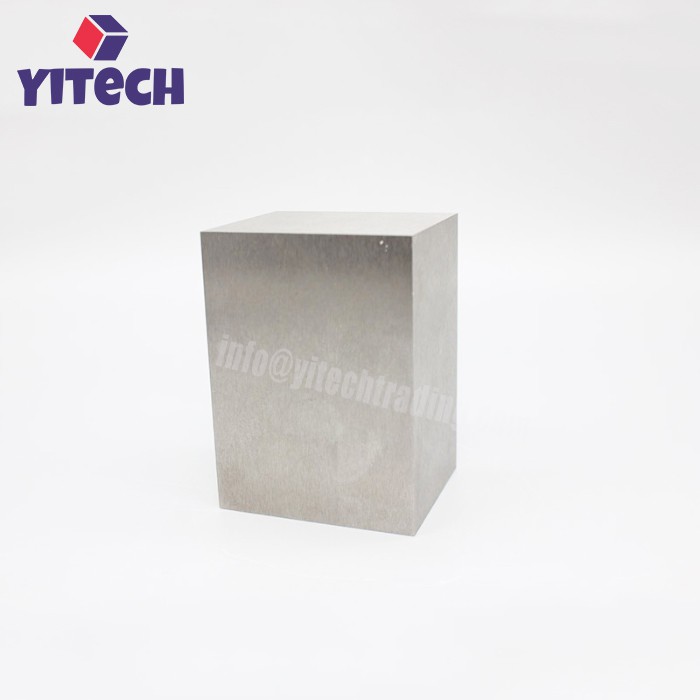
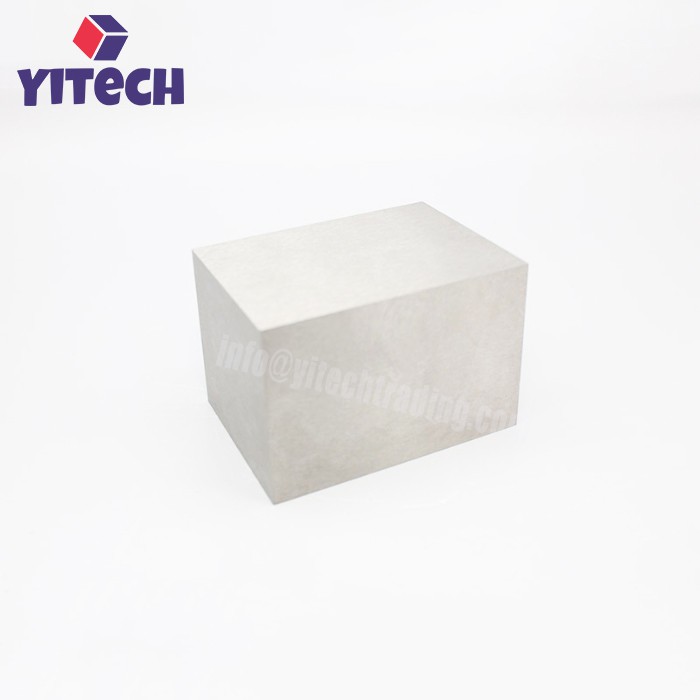
Adding tungsten alloy counterweights the size of a book to key areas like wings and tail fins perfectly balances the aircraft's weight distribution. These compact counterweights are not only small in size but also highly dense, providing sufficient weight to optimize the aircraft's balance without adding excessive bulk.
Vibration Dampening Expert
The intense vibrations generated by the engine are absorbed by tungsten alloy components, acting like "shock absorbers" for the aircraft. This vibration resistance is critical for flight stability and passenger comfort.
Space Magician
Within the confined spaces of an aircraft cabin, tungsten alloy delivers maximum counterweight effect with minimal volume. This characteristic gives tungsten alloy an unparalleled advantage in aircraft design, especially where space is limited.
The "Anchor" of Flight Control Systems
Modern aircraft rely on sophisticated fly-by-wire systems with precision flight control computers. These systems are equipped with tungsten alloy counterweights, which act as "physical stabilizers" for electronic equipment:
Ensuring precise control surface response: Tungsten alloy counterweights ensure accurate responses from flight control surfaces, enhancing flight precision.
Counteracting turbulence-induced errors: Airflow disturbances are inevitable during flight. Tungsten alloy counterweights effectively neutralize these errors, maintaining flight stability.
Maintaining system stability in extreme weather: Even in harsh weather conditions, tungsten alloy counterweights keep flight control systems operating smoothly.
The "Heat-Resistant Warrior" in Engines
The interior of jet engines can reach temperatures of thousands of degrees, where ordinary metals would melt or deform. Thanks to its exceptional heat resistance, tungsten alloy is used to manufacture:
Turbine blade counterweights: Ensuring balance and stability of turbine blades under high temperatures.
High-temperature bearing components: Maintaining normal operation of bearings in extreme heat.
Vibration damping parts: Absorbing engine vibrations to ensure smooth operation.
These critical components act like the "immune system" of the engine, keeping this "heart of the airplane" beating strongly in extreme conditions.
The "Cosmic Counterweight" for Spacecraft
In the space environment, weight distribution is even more critical. Satellites and space stations use tungsten alloy for:
Attitude control counterweights: Adjusting flight angles to ensure stable spacecraft orientation.
Instrument stabilization bases: Providing a stable platform for precise scientific experiments.
Radiation shielding: Blocking cosmic rays to protect equipment and personnel inside the spacecraft.
The Materials Science Behind Safety
Why tungsten alloy? It all comes down to its three superpowers:
Density champion: A tungsten alloy block of the same size weighs 2.5 times more than steel.
Heat resistance king: Capable of withstanding the extreme heat of jet engines.
Stability master: Unlike lead, it is non-toxic and resists corrosion better than other metals.
These properties make tungsten alloy an indispensable material in aviation and aerospace.
New Possibilities for Future Aviation
As aviation technology advances, tungsten alloy is expanding into new applications:
Balance systems for electric vertical takeoff and landing (eVTOL) aircraft: Ensuring stable takeoffs and landings.
Thermal protection components for supersonic airliners: Safeguarding critical parts during high-speed flight.
Artificial center of gravity design for drones: Improving flight stability and control.
The Invisible Key Player
Although passengers will never directly interact with these hidden tungsten alloy components inside an aircraft, every smooth takeoff, every safe flight owes its success to the silent dedication of this "heavyweight champion." With its unique physical properties, it safeguards humanity's dream of conquering the skies.
In a sense, tungsten alloy is like the "unsung hero" of aviation-unnoticed yet indispensable. The next time you board a plane, perhaps you'll remember: inside this soaring steel eagle, there are incredible "heavy metals" working tirelessly to ensure a safe journey.